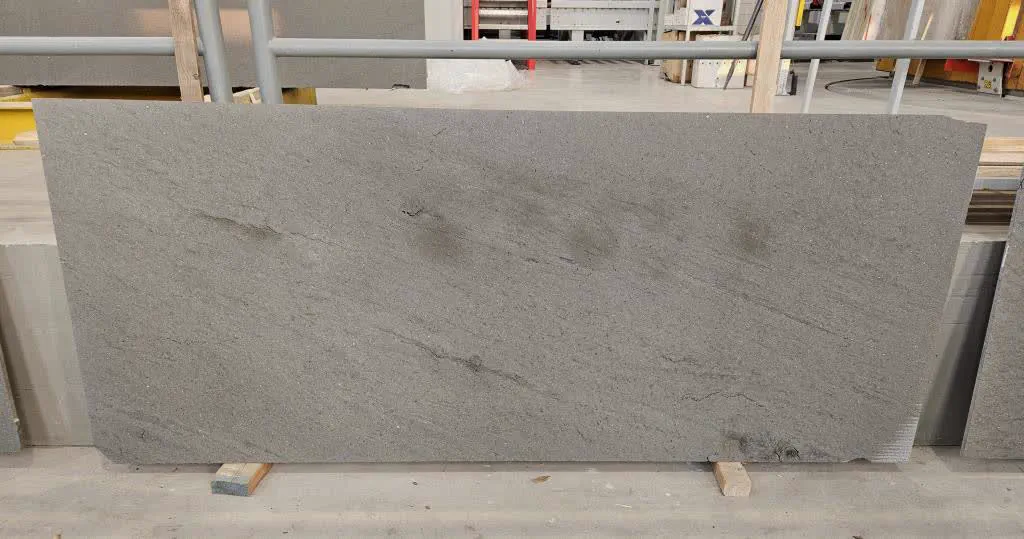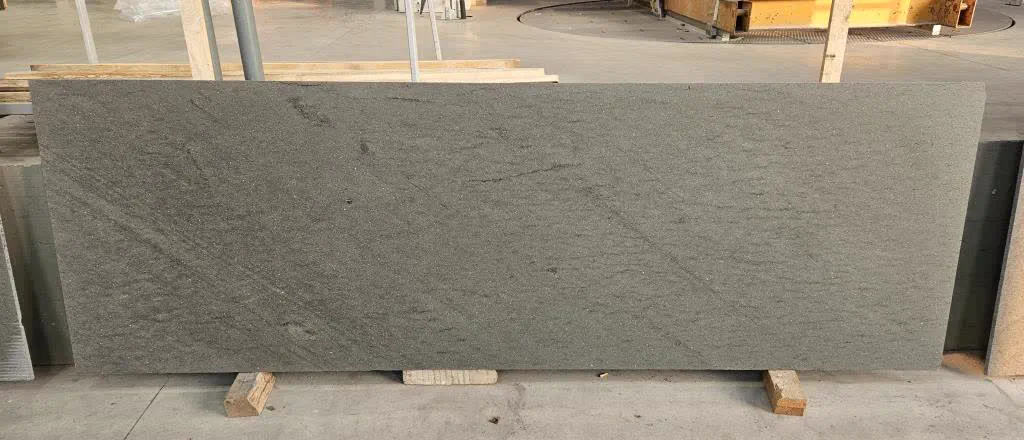
Basaltina — Basalt from Italy

Italy · Basalt

Basaltina

also known as Basaltina di Viterbo, Basalt Lazio, Italian Volcanic Basalt

A dense, dark volcanic basalt from the highland plateau north of Rome (Viterbo, Lazio). Basaltina is prized for its deep charcoal-grey, near-uniform appearance and exceptional durability — one of the hardest Italian stones. Widely used for contemporary facade panels, exterior paving, pool surrounds, and architectural detailing in both Italy and international luxury projects.

Origin
Vulsini / Cimini volcanic district, Viterbo (Lazio), Viterbo province, Lazio (volcanic highlands), Italy
Stone type
Basalt (Volcanic stone — tested per ASTM C97/C170 methods (no single dimension-stone class))
Density
2.95 g/cm³
Look
dark, contemporary, uniform, volcanic, exterior safe
Finishes
honed, sandblasted, flamed, natural split, bush-hammered
Formats
slab, panel, tile, paver, cut-to-size
Exterior use
Suitable — dense, exterior-grade
Est. yield / waste
~10% indicative
US import (HTS)
6802.99.00.50 (other monumental/building stone, worked)

Type-level physical facts shown. Per-lot lab values (absorption, flexural strength) confirmed at quotation.

Produced by Lazio Volcanic Stone Group · Viterbo, Lazio
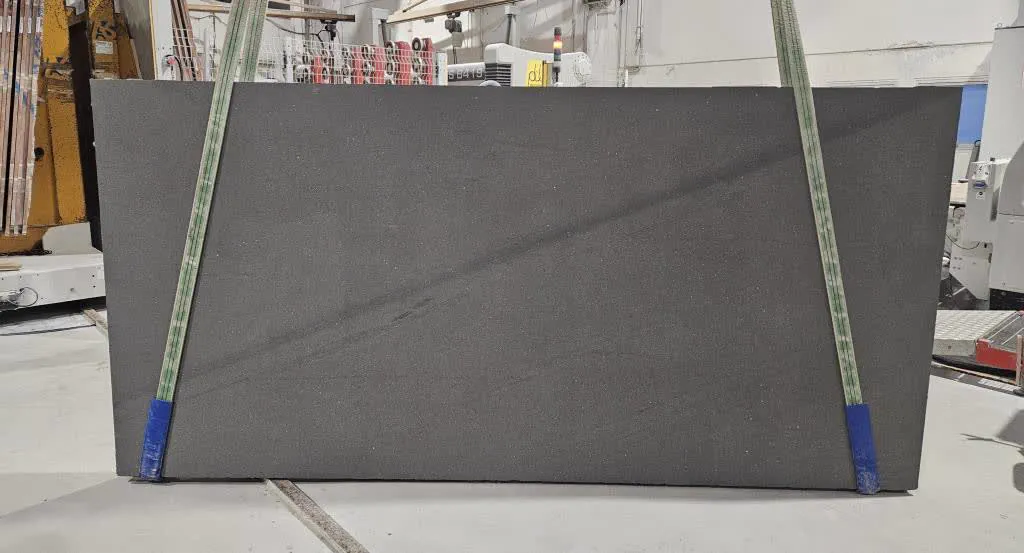
Available now

Verified stock · Verona network
111slabs in stock
11blocks
279 × 128 cmaverage slab
Basaltina slab in stock
312 × 151 cm · 2 cm · in stock, Verona
Basaltina slab in stock
266 × 110 cm · 2 cm · in stock, Verona
Basaltina slab in stock
296 × 94 cm · 2 cm · in stock, Verona

Stock moves; figures indicative and confirmed at enquiry. Blocks available to order for cut-to-size and book-matched runs.

Origin & quarry

Basaltina is the grey volcanic stone of the Viterbo district north of Rome — even-grained, durable and quietly modern. A classic Roman exterior stone that also reads beautifully indoors honed.

Geology. Pyroclastic volcanic stone (basaltic tuff/lava) from the Lazio volcanic district; fine even grain, warm-mid grey.

Where it works

Specify with confidence

  • Exterior paving and cladding (durable, frost-resistant)
  • High-traffic interior floors
  • Stairs and public realm
  • Contemporary minimal interiors

Use with care

  • Slightly porous — seal for stain resistance in food/wet areas
  • Finish drives tone: honed is darker, flamed/bush-hammered lighter

Verified sources

Curated · never pay‑to‑rank

We verify each source against five transparent trust signals and route every enquiry through our desk — you deal with us, not a cold inbox.

Viterbo quarry group

Quarry-direct · Viterbo, Lazio · Italy

Lithos‑verified 5/5
  • Quarry-direct or verified processor
  • Physical samples available
  • Technical specs documented
  • Photos verified at source
  • Export-ready for US trade
Enquire through Lithos

Reference projects

Roman public realm

Paving & architecture · Rome, Italy

The volcanic stone tradition of Lazio — paving, kerbs and civic architecture.

Good to know

Is Basaltina suitable for ventilated facade systems?

Yes — its high compressive strength and low absorption make it a prime candidate for rainscreen/open-joint ventilated facades, where dimensional stability and freeze-thaw resistance are critical.

How does Basaltina differ from Pietra Lavica?

Both are Italian volcanic stones, but Pietra Lavica is quarried in Sicily (Etna) and has a more textured, ropy lava surface. Basaltina from Viterbo is a more compact, finer-grained basalt suited to precision cut-to-size work.

Related stone

photo pending · verified source

Pietra Lavica dell'Etna

Basalt · Italy