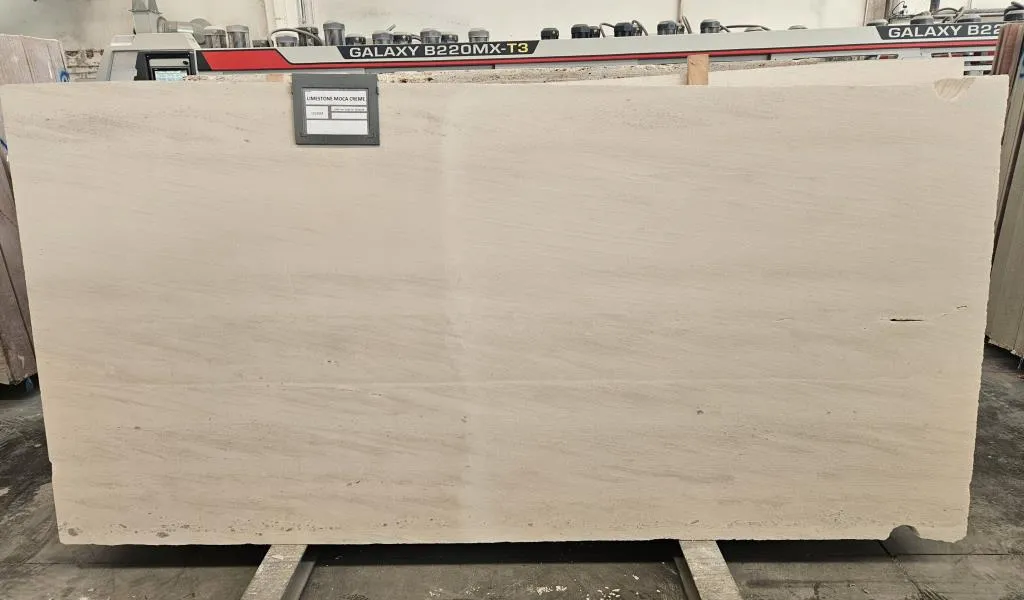
Portugal · Limestone
also known as Moleanos, Moca Creme
Portugal's workhorse architectural limestone: a warm cream stone available in fine- and coarse-grain, used at scale for facades, cladding and flooring worldwide.
Type-level physical facts shown. Per-lot lab values (absorption, flexural strength) confirmed at quotation.
Produced by Portuguese Limestone Group · Alcobaça / Ataija / Moca, Estremadura
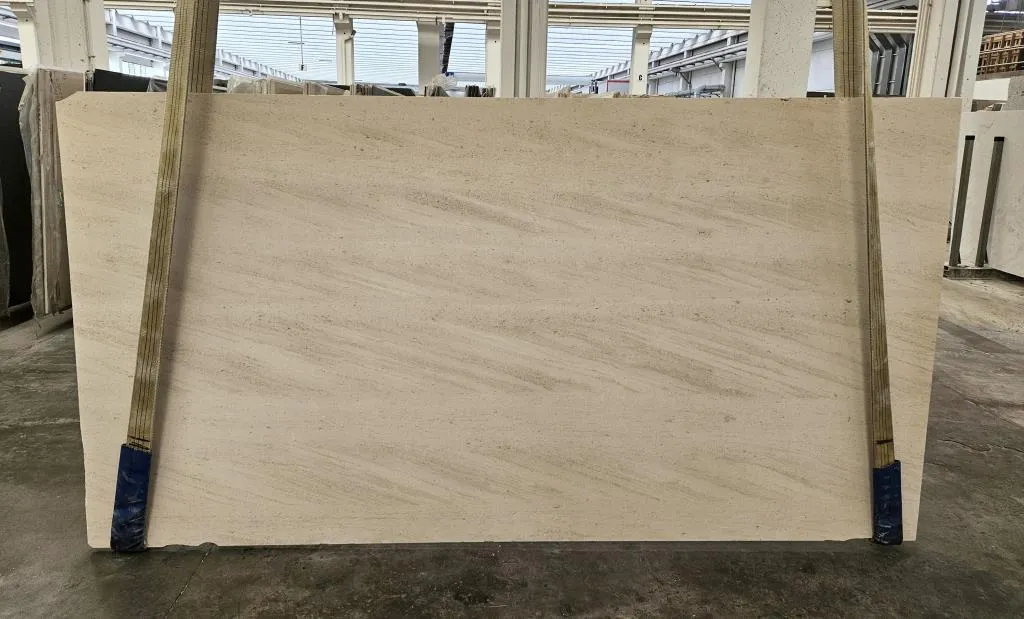
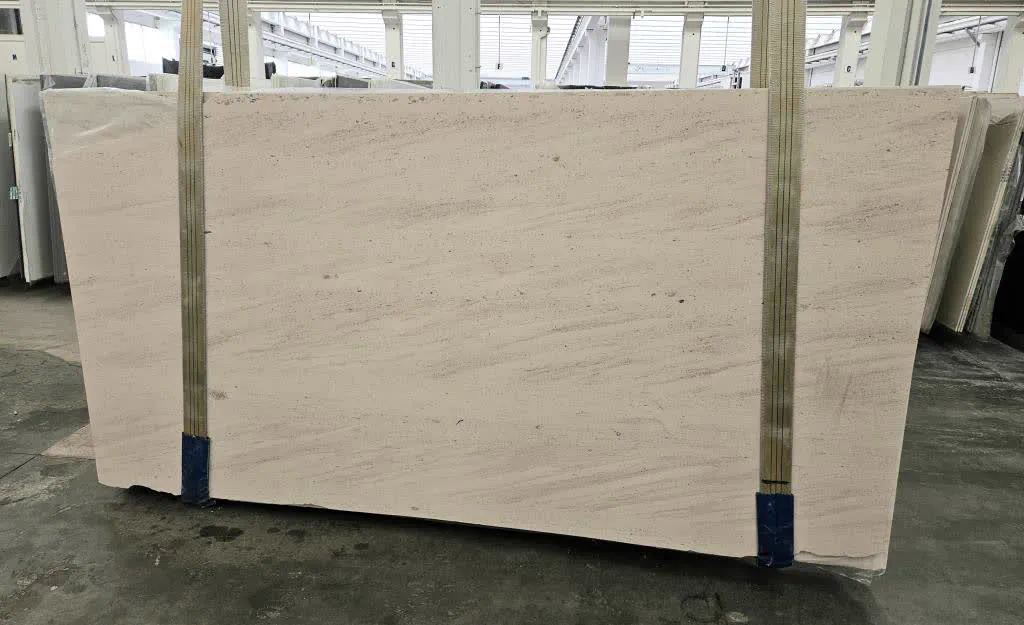

Stock moves; figures indicative and confirmed at enquiry. Blocks available to order for cut-to-size and book-matched runs.
Moca Cream comes from the Maciço Calcário Estremenho in central Portugal, a continuous Jurassic limestone massif stretching through the Serra de Aire e Candeeiros. The same massif supplies Moleanos and Lioz, but Moca Creme occupies the fine-grain, high-volume export tier. Decades of consistent supply to European airports, public buildings and hotel programmes have made it one of the benchmark neutral architectural limestones worldwide.
Geology. Fine-to-medium-grained Jurassic limestone (Oxfordian-Kimmeridgian) with occasional bioclastic inclusions. Available in fine-grain (very uniform) and coarse-grain grades. Very low absorption and consistent colour across large production volumes.
We verify each source against five transparent trust signals and route every enquiry through our desk — you deal with us, not a cold inbox.
Portuguese limestone used in terminal floors and cladding; Moca Creme is among the Estremenho stones in major Portuguese public infrastructure.
Moleanos / Moca Creme has been a standard facade and flooring specification in European airports and civic buildings, valued for its predictable supply and neutral warm tone.
Yes. It is a standard choice for large facade and cladding programmes, available in panel formats and several finishes; grade selection drives exterior performance.
Moleanos is the quarry-area name (around the village of Mos near Porto de Mós); Moca Creme is the commercial export brand for the same fine-grained Jurassic limestone. In practice the terms are used interchangeably, with 'Moleanos' more common in European specification and 'Moca Cream' in North American and Gulf markets.