Travertino Silver — Travertine from Turkey

Turkey · Travertine

Travertino Silver

also known as Silver Travertine, Silver Vein Travertine

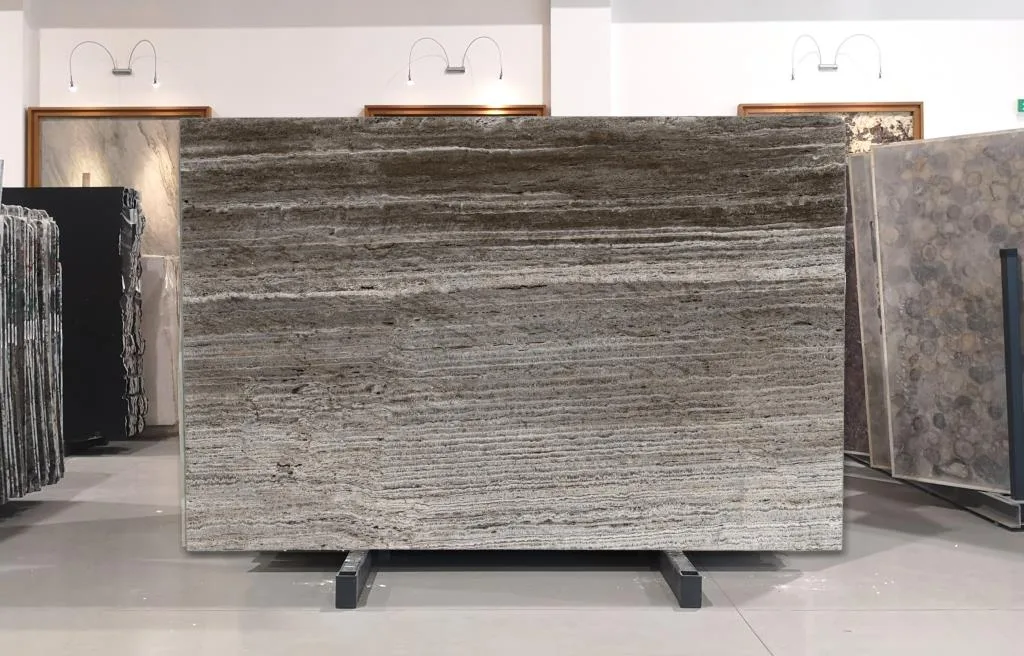
The silver-grey variant from the Denizli travertine family. Where Denizli Classic is warm cream, Silver offers a cooler, greyer palette that suits contemporary interiors and facades seeking the texture of travertine without the beige overtone. Selected from deeper strata with higher mineral content.

Origin
Emet / Kütahya, Turkey; Azarshahr, Iran, Denizli, Aegean region, Turkey
Stone type
Travertine (ASTM C1527 (travertine))
Density
2.52 g/cm³
Look
cool grey, contemporary, neutral, refined
Finishes
polished, honed, brushed, sandblasted
Formats
slab, tile, cut-to-size, pavers
Exterior use
Suitable — dense, exterior-grade
Est. yield / waste
~12% indicative (tight grain, low vacuolarity reduces offcut vs Roman travertine)
US import (HTS)
6802.91.20.00 (travertine, worked building stone)

Type-level physical facts shown. Per-lot lab values (absorption, flexural strength) confirmed at quotation.

Produced by Tivoli Travertine Group · Tivoli / Guidonia, Lazio
Available now

Verified stock · Verona network
204slabs in stock
10blocks
261 × 168 cmaverage slab
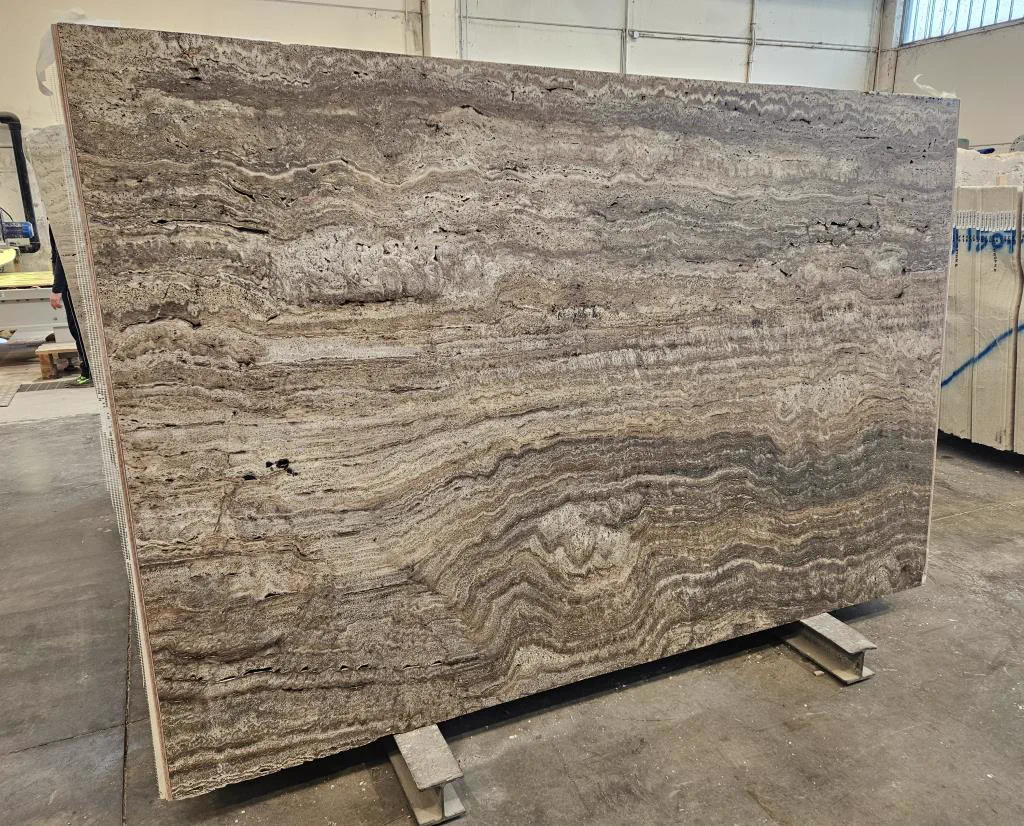
Travertino Silver slab in stock
265 × 172 cm · 2 cm · vein-cut · in stock, Verona
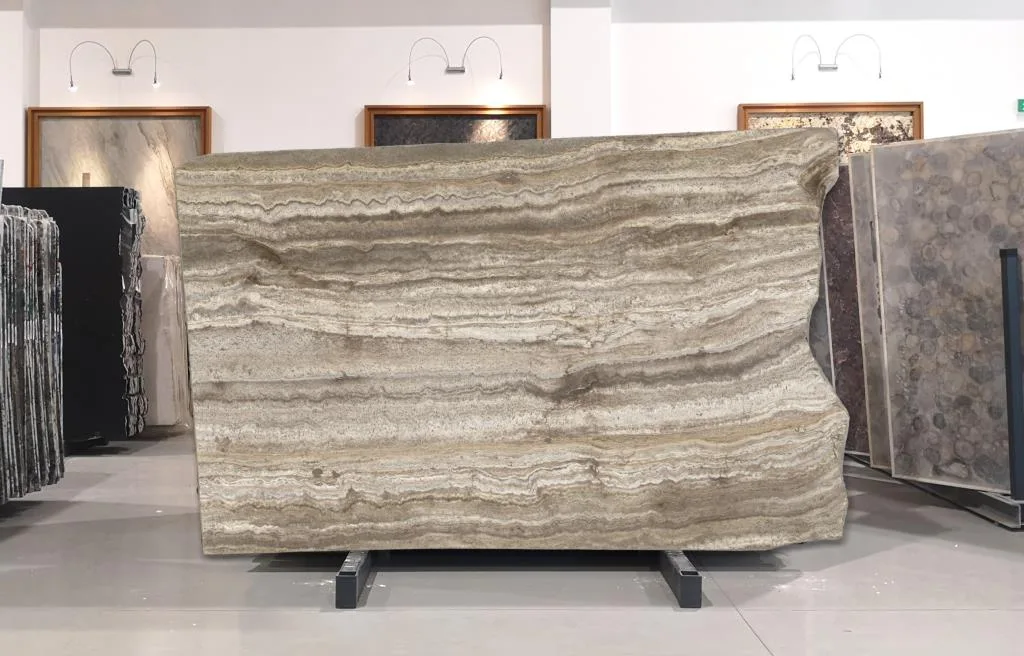
Travertino Silver slab in stock
262 × 167 cm · 2 cm · vein-cut · in stock, Verona
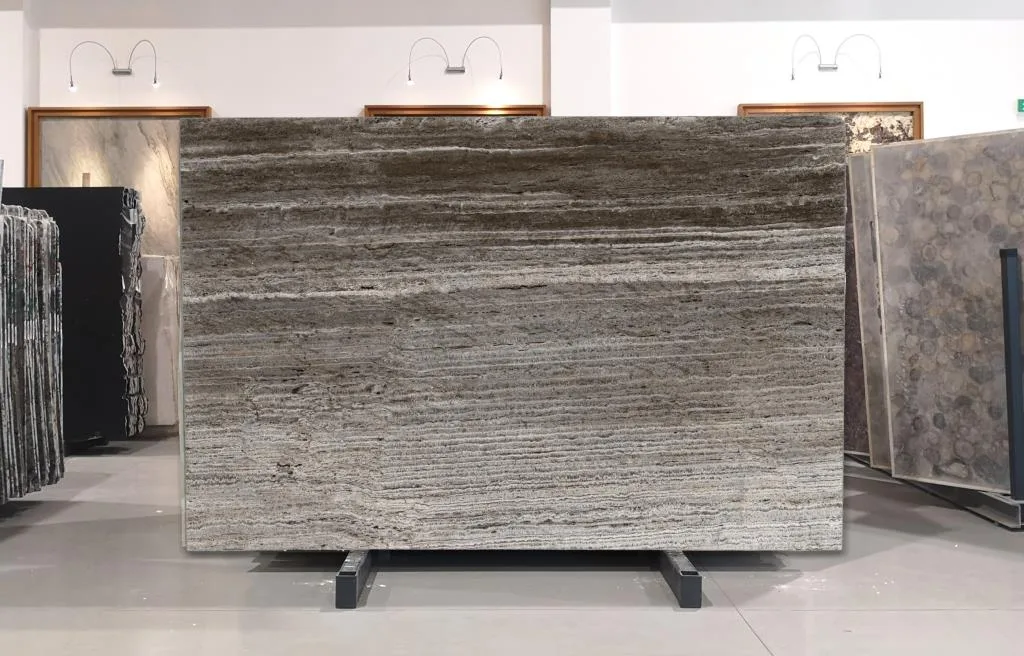
Travertino Silver slab in stock
256 × 165 cm · 2 cm · vein-cut · in stock, Verona

Stock moves; figures indicative and confirmed at enquiry. Blocks available to order for cut-to-size and book-matched runs.

Origin & quarry

Silver travertine is quarried primarily around Emet in Kütahya province, Turkey, and in comparable deposits in Azarshahr, Iran. Its cool, even silver-grey tone and compact structure make it a widely specified alternative to Roman travertine wherever a cooler, more contemporary palette is required.

Geology. Cold-spring calcareous travertine; the cool silver-grey tone comes from iron and manganese content. Tighter grain and lower natural porosity than Roman travertine, with a more uniform banding pattern.

Where it works

Specify with confidence

  • Exterior cladding and ventilated facades
  • Interior and exterior flooring in hospitality
  • Pool surrounds and hardscape (unfilled, brushed)
  • Large wall panels — the cool tone works in both warm-timber and cool-metal interiors

Use with care

  • Specify filled for interior floors to avoid grout maintenance in the natural pores
  • Confirm lot absorption and frost rating for northern-climate exteriors
  • Honed or brushed preferred over polished for exterior floors (slip)

Verified sources

Curated · never pay‑to‑rank

We verify each source against five transparent trust signals and route every enquiry through our desk — you deal with us, not a cold inbox.

Turkey quarry group

Quarry-direct · Emet / Kütahya, Turkey · Turkey

Lithos‑verified 5/5
  • Quarry-direct or verified processor
  • Physical samples available
  • Technical specs documented
  • Photos verified at source
  • Export-ready for US trade
Enquire through Lithos

Iran quarry group

Quarry-direct · Azarshahr, East Azerbaijan · Iran

Lithos‑verified 3/5
  • Quarry-direct or verified processor
  • Physical samples available
  • Technical specs documented
  • Photos verified at source
  • Export-ready for US trade
Enquire through Lithos

Good to know

How does Silver Travertine differ from Roman Travertine?

Roman travertine (Tivoli, Italy) has a warm ivory-beige tone and more open, visible banding. Silver travertine is cooler — a grey-silver palette — with tighter grain and lower natural porosity. Both are classic exterior cladding stones, but Silver suits contemporary, minimalist palettes better.

Is Silver Travertine suitable for exteriors and facades?

Yes. Dense, frost-tested lots are widely used for ventilated facades, paving and pool surrounds. Confirm the specific lot's absorption and compressive strength for northern climates. Unfilled and honed or brushed is the standard exterior spec.

Filled or unfilled for interiors?

Filled is standard for interior floors — it creates a flat surface, avoids grout maintenance in the natural pores and is easier to seal. Unfilled shows the natural texture and is preferred for walls and exteriors where drainage is acceptable.

Related stone

photo pending · verified source

Travertino Denizli

Travertine · Turkey

Travertino Romano — Travertine from Italy

Travertino Romano

Travertine · Italy in stock

photo pending · verified source

Burdur Beige

Limestone · Turkey