Greece · Marble
also known as Volakas White, Greek Calacatta
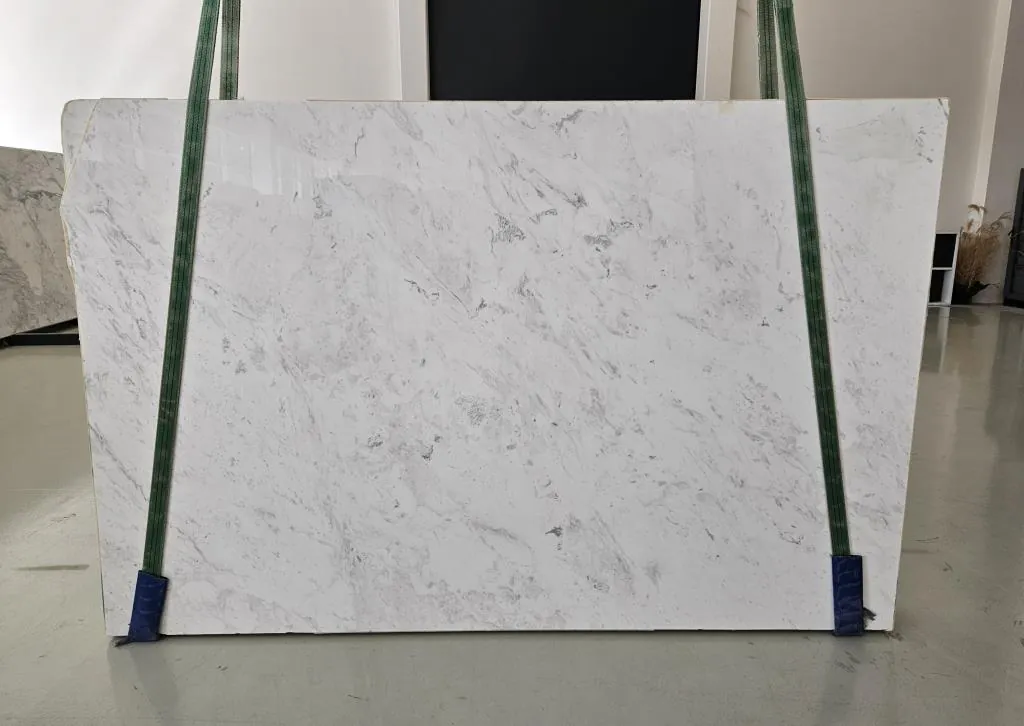
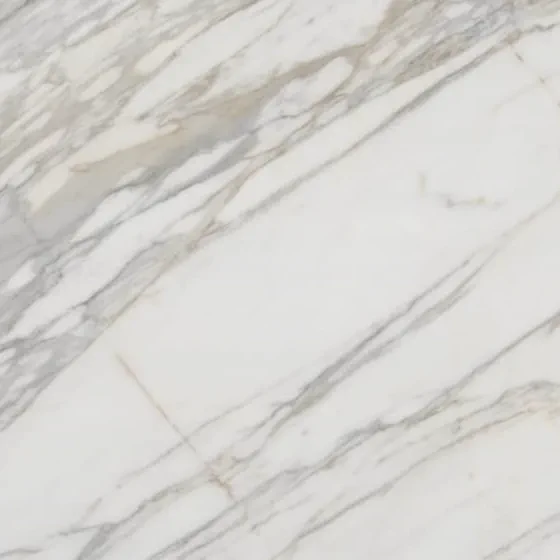
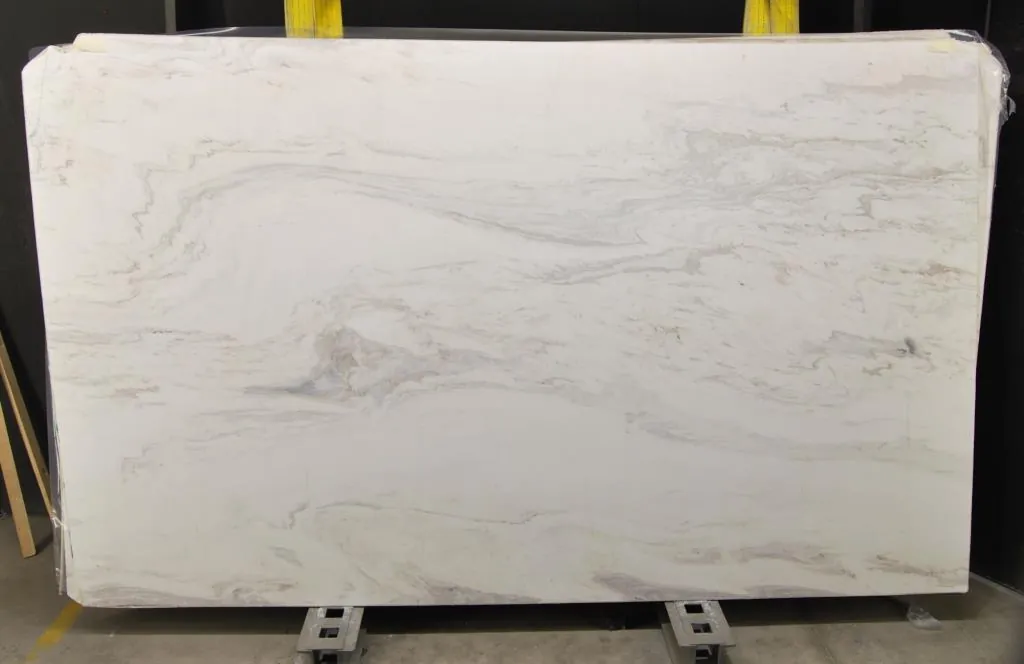
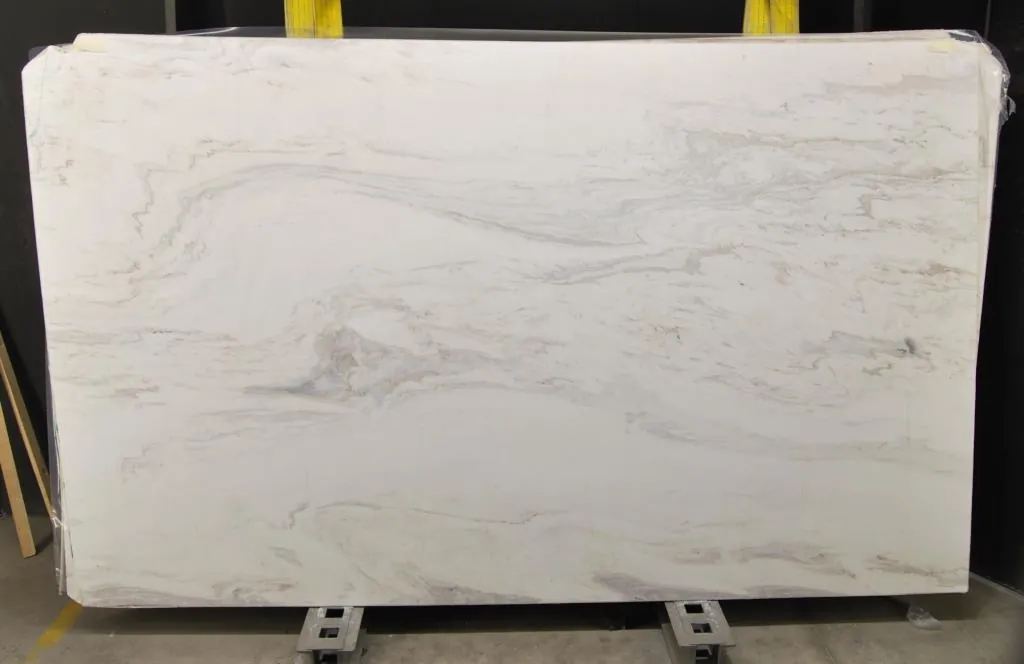
A white Greek marble with soft grey and faint burgundy veining, an elegant alternative to the Italian whites for walls and floors.
Lab values verified.
Produced by Aegean Marble Group · Drama / Thassos / Penteli

Stock moves; figures indicative and confirmed at enquiry. Blocks available to order for cut-to-size and book-matched runs.
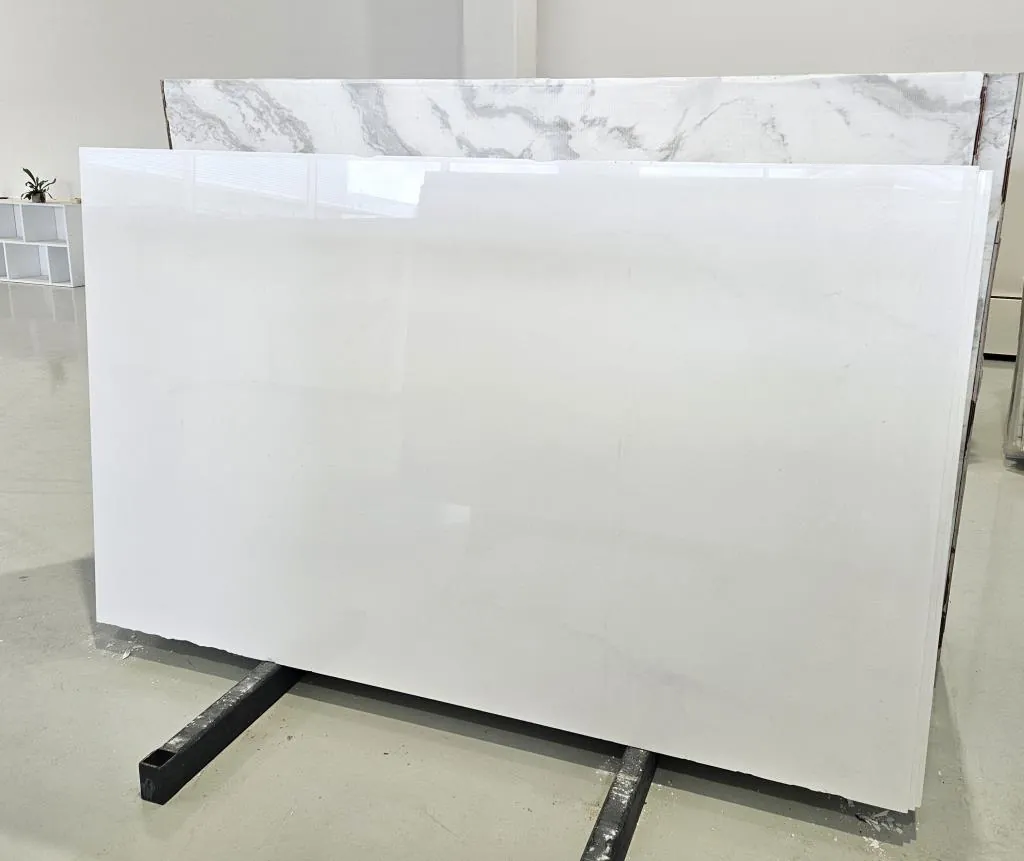
Volakas comes from the Drama prefecture in northeastern Greece, where the Rhodope mountains yield a distinctive white marble with grey-burgundy veining unlike anything from the Italian Alps. The stone has been quarried in the Volax and Sidironero areas for decades and is widely used across southern and central Europe as a cost-effective Italian-white alternative. Each block from this region varies in vein weight and burgundy intensity — some slabs read almost pure white, others show a clear pink-lavender cast.
Geology. Coarse-grained crystalline marble, Late Cretaceous metamorphic. White calcite matrix overprinted with a diagnostic network of light grey hairlines and faint burgundy veins — the burgundy tones derive from iron-oxide mineral inclusions, the grey from graphite traces. Related to the Kavala marble family.
We verify each source against five transparent trust signals and route every enquiry through our desk — you deal with us, not a cold inbox.
Volakas used as large-format floor tile across the main lobby; book-matched wall panels in the lift lobby
Full exterior facade in Volakas 3cm panels; natural weathering after 3 years shows stable tone
Volakas shares the white base but has a gentler, more complex vein pattern — less bold than Statuario, softer than Bianco Carrara, with a distinctive faint burgundy tone that Italian whites never carry. It typically runs 15-25% less expensive, making it a favoured alternative for large commercial and hospitality projects where Italian-white aesthetics matter but budget constrains the full Carrara premium.
The iron-oxide veins in Volakas are stable under normal interior conditions. Prolonged standing water or acidic cleaning agents can accelerate surface oxidation over years, producing a slightly deeper rust tone along the veins. Standard penetrating stone sealer applied at installation and refreshed every 2-3 years prevents this.
Yes — it is widely used for exterior facade cladding across southern and central Europe, especially in the 2-3cm thickness range. Specify a water-repellent impregnating sealer for facades in wet climates. In severe freeze-thaw zones, verify the absorption rate of the specific lot before specification.