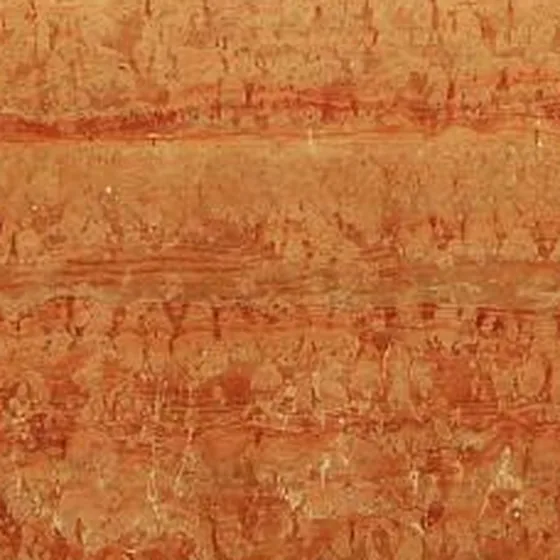
Egypt · Granite
also known as Red Aswan, Aswan Syenite, Imperial Red Egypt, Granito d'Assuan
One of the world's most historically significant granites: the deep-red to burgundy syenite quarried at Aswan on the Nile since the pharaonic era. Ancient Egyptians used it for obelisks, sarcophagi and temple columns — the granite of Karnak, Luxor and the Vatican obelisks. Today it remains a premium choice for monumental facades, countertops and prestige interior applications. Its coarse porphyritic texture, dominated by large red feldspar crystals and quartz, makes every slab unique.
Type-level physical facts shown. Per-lot lab values (absorption, flexural strength) confirmed at quotation.
Aswan Red is sometimes sold as 'Imperial Red Egypt' in the trade, but it is distinct from Swedish or Indian 'Imperial Red' granites. The Egyptian variety comes exclusively from Aswan and has a coarser, more porphyritic texture with larger feldspar phenocrysts.
Yes — Aswan granite (both red and grey varieties) was quarried continuously from the Old Kingdom onwards. The famous unfinished obelisk in Aswan's northern quarry, the largest known ancient obelisk, was cut directly from this rock.