Italy · Marble
also known as Calacatta Paonazzo, Viola Carrara
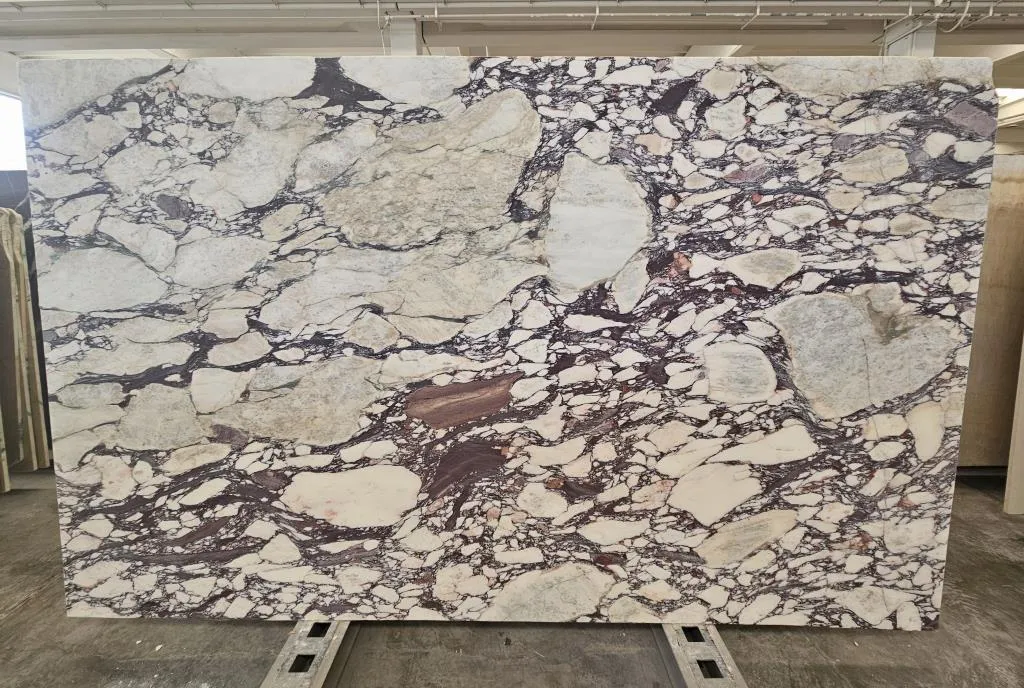
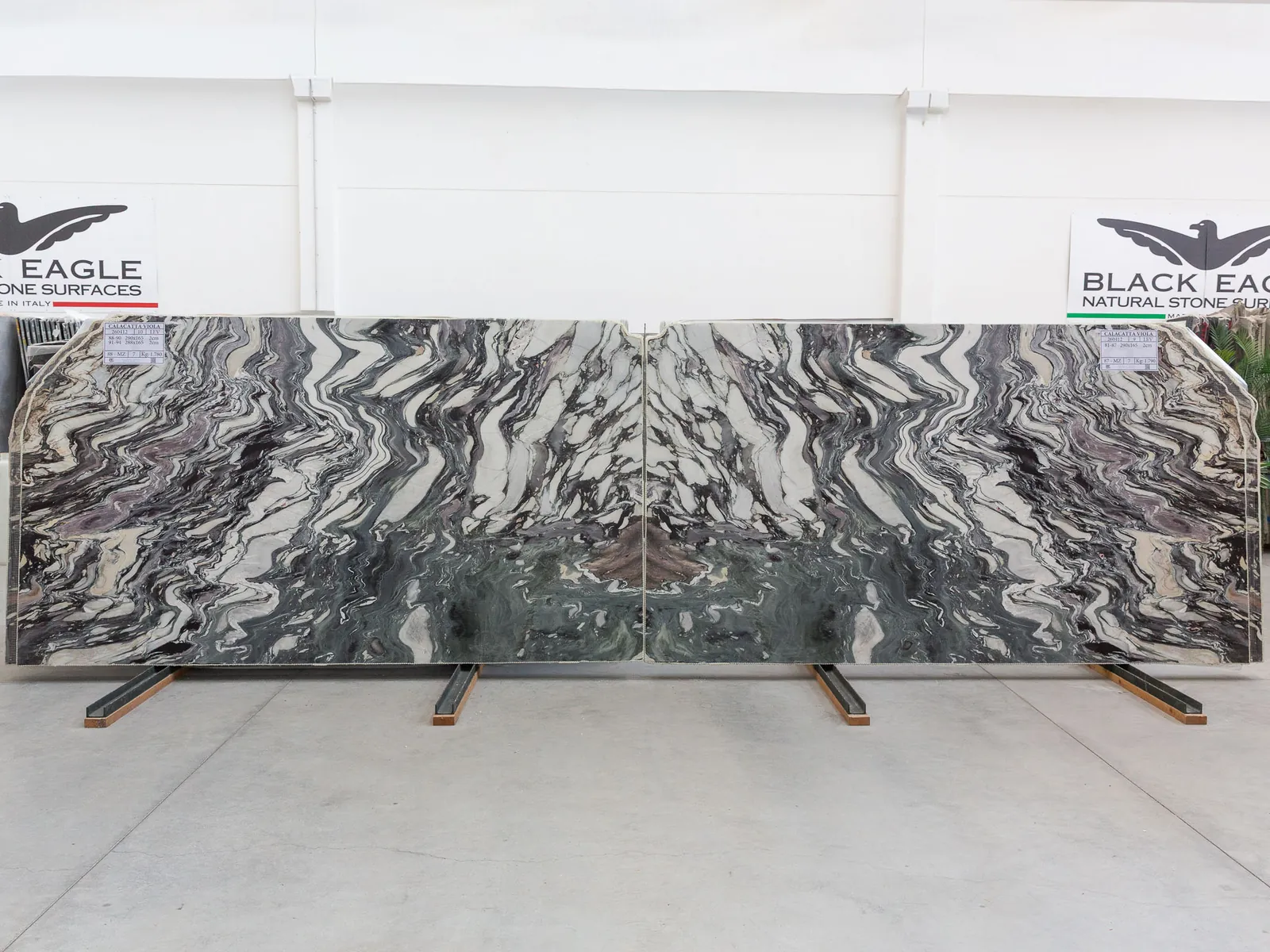
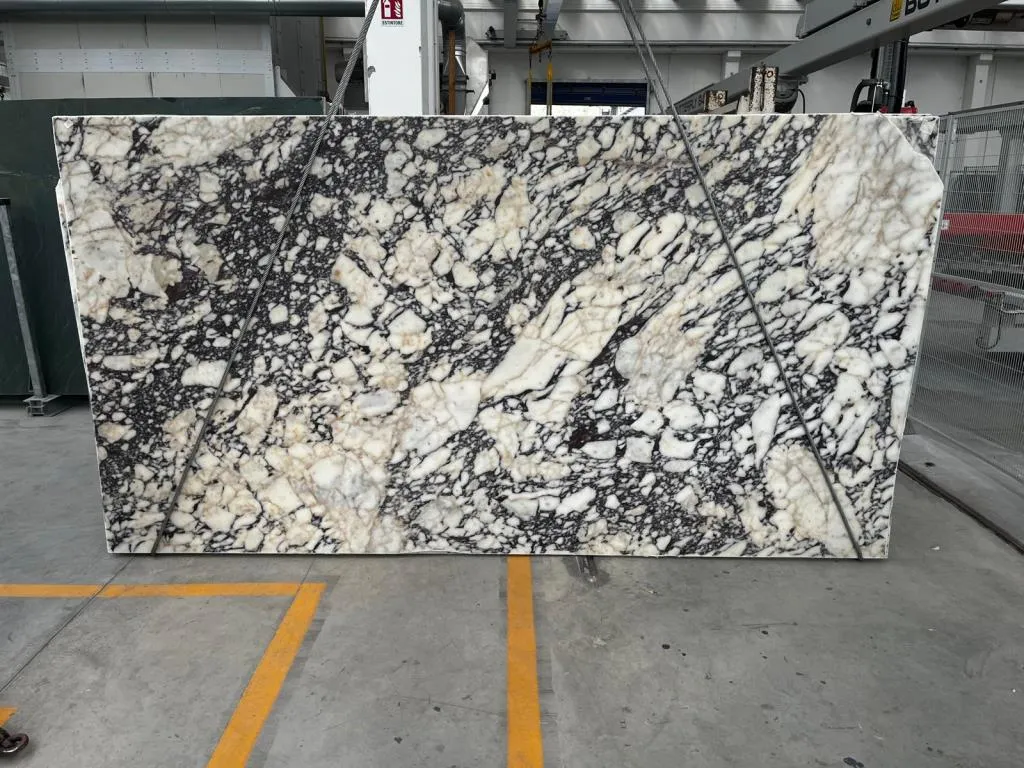
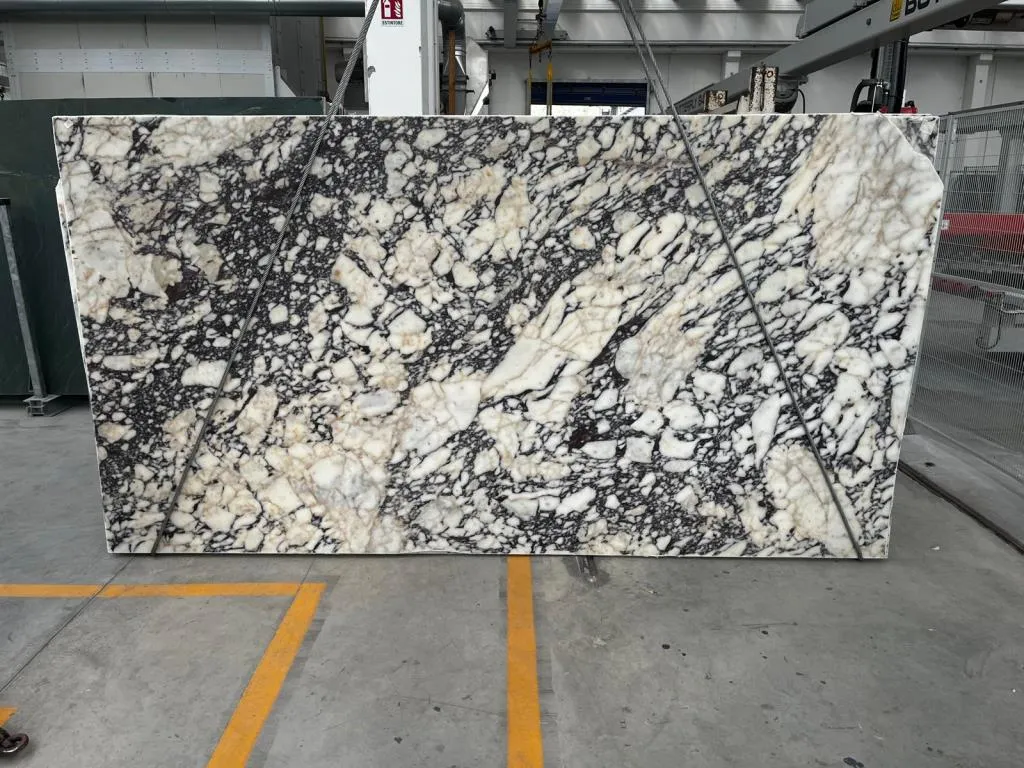
The most dramatic of the Calacatta marbles: a brilliant white Carrara field crossed by bold veins of purple, violet and grey. Closely related to the ancient Pavonazzetto of classical antiquity, this is one of the rarest and most arresting Italian marbles, prized for statement walls and luxury vanities.
Lab values verified.
Produced by Apuan White Marble Group · Apuan Alps, Carrara


Stock moves; figures indicative and confirmed at enquiry. Blocks available to order for cut-to-size and book-matched runs.
Calacatta Viola comes from the high-altitude quarries of the Fantiscritti basin near Carrara, among the most prized and most restricted extraction sites in the Apuan Alps. The purple veining is caused by manganese oxide inclusions — a mineral chemistry so rare at commercial scale that only a handful of quarry blocks yield the dramatic viola tones each season. The stone has been prized since Roman antiquity: the ancient Pavonazzetto, imported from Phrygia for imperial buildings including the Pantheon, shares the same manganese-purple signature. Today Calacatta Viola is among the rarest Carrara marbles in production.
Geology. Metamorphic crystalline marble, Lower Jurassic. White calcite matrix overprinted with large manganese and iron-oxide veins that produce the characteristic purple-violet (viola) and grey-brown tones. Genetically related to the ancient Pavonazzetto quarried in Phrygia — the same mineral chemistry of manganese inclusions creates the purple signature. One of the rarest extraction zones in the Apuan Alps.
We verify each source against five transparent trust signals and route every enquiry through our desk — you deal with us, not a cold inbox.
Full book-matched shower enclosure and vanity in Calacatta Viola; single-block lot for matched purple veins across all panels
Feature wall behind freestanding tub in Calacatta Viola; the purple movement chosen to anchor a bespoke interior palette
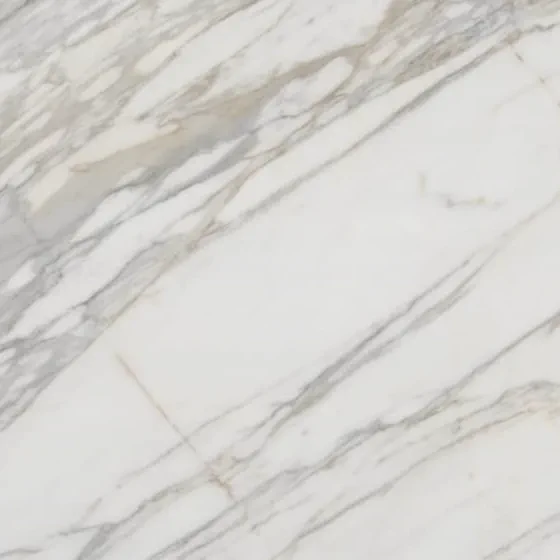
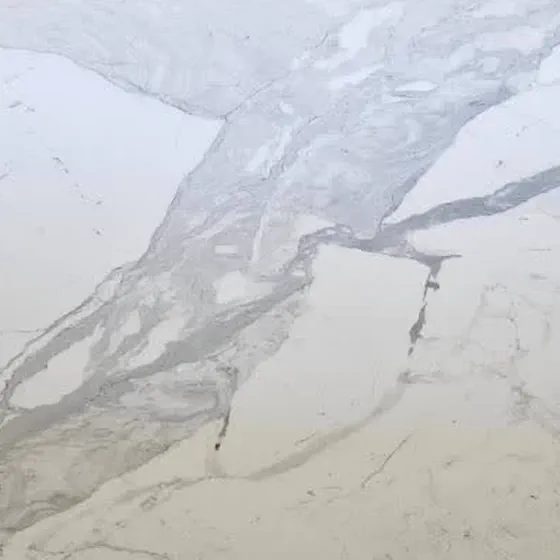
All Calacatta marbles come from the high-altitude quarries of Carrara, but Viola is distinguished by bold purple and violet veins — the result of rare manganese oxide inclusions that do not appear in the gold-veined (Calacatta Oro) or grey-veined (Calacatta Borghini) varieties. Each block is unique; no two slabs have identical purple tone or vein weight, which makes lot-matching critical for large installations.
Yes — it shares the same geological origin. The ancient Romans imported purple-veined Pavonazzetto (Marmor Phrygium) from quarries in Phrygia for imperial buildings, including the Pantheon. Calacatta Viola from Carrara is the closest modern equivalent: the same manganese-oxide chemistry that produces the purple in Pavonazzetto also produces the viola tones in Carrara. Production quantities are strictly limited by the rarity of the manganese zone in the quarry face.
Yes — budget 20-25% above the net installed area, significantly more than a standard marble. The vein pattern varies dramatically between slabs even within one block, and achieving a coherent book-match means rejecting slabs where the purple tone breaks. Request to inspect slabs in person or via high-resolution photos before confirming the order, and ask for all pieces to come from a single numbered block.