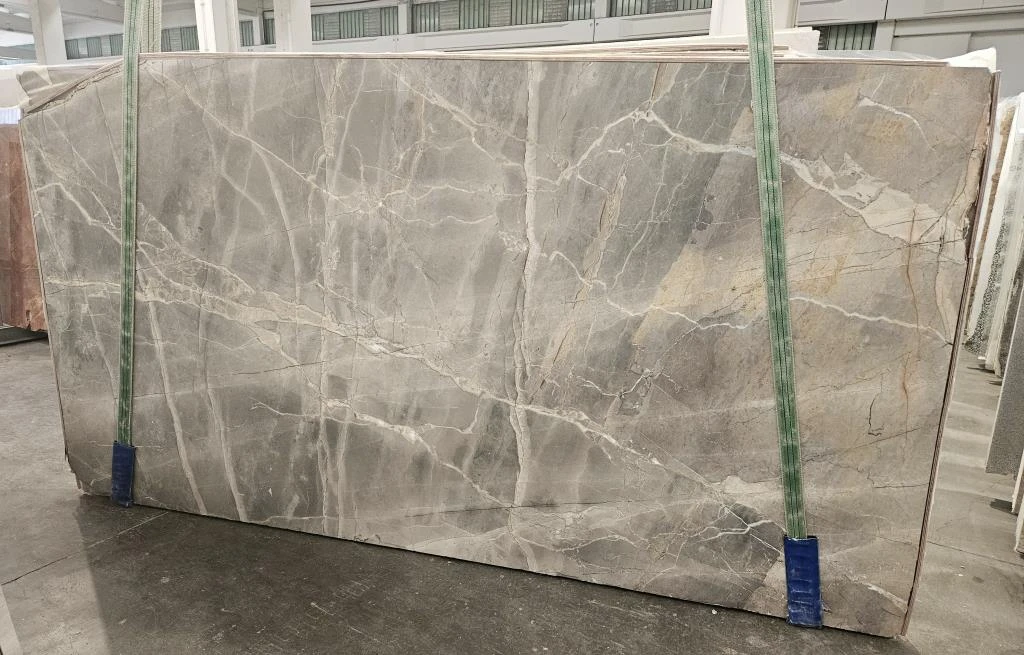
Italy · Marble
also known as Forest Flower Marble
A refined Italian marble with a muted grey-purple ground and delicate lighter veining. Quarried in the Apuan Alps area of Tuscany, Fior di Bosco offers a subtler alternative to classic white marbles — prized for its restrained colour palette in contemporary luxury interiors.
Type-level physical facts shown. Per-lot lab values (absorption, flexural strength) confirmed at quotation.
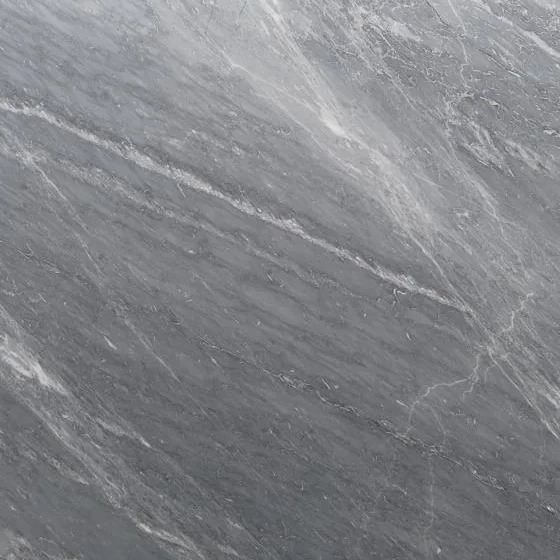
Fior di Bosco (Forest Flower) is quarried in the northern Apuan Alps of Tuscany. Its grey-tortora ground threaded with warm golden veins distinguishes it from the classic white Carraras — a warmer, more tonal Italian marble that bridges grey and gold palettes in one stone.
Geology. Metamorphic marble, grey-tortora ground with distinctive warm golden and copper veining. The gold tones trace iron-oxide and limonite concentrated along deformation fractures in the metamorphic formation — the same Apuan Alps belt as Carrara, but with different mineralogy.
We verify each source against five transparent trust signals and route every enquiry through our desk — you deal with us, not a cold inbox.
Iron-oxide and limonite concentrated along deformation fractures in the metamorphic marble. These minerals precipitated from groundwater percolating through the rock after metamorphism — giving each slab a unique warm pattern against the grey-tortora ground.
No. Grigio Carnico is an Austrian marble with sharp white calcite veins on an anthracite-grey ground — more graphic and cooler. Fior di Bosco has a softer grey-tortora base with warm gold and copper veining — more tonal warmth, less graphic contrast.
With caution. Like all Italian marbles it is acid-sensitive and will etch under citrus, vinegar or coffee if unsealed. Seal with a penetrating impregnator before use and reseal annually. For a kitchen where stone is regularly exposed to acid, consider a harder quartzite or limestone instead.